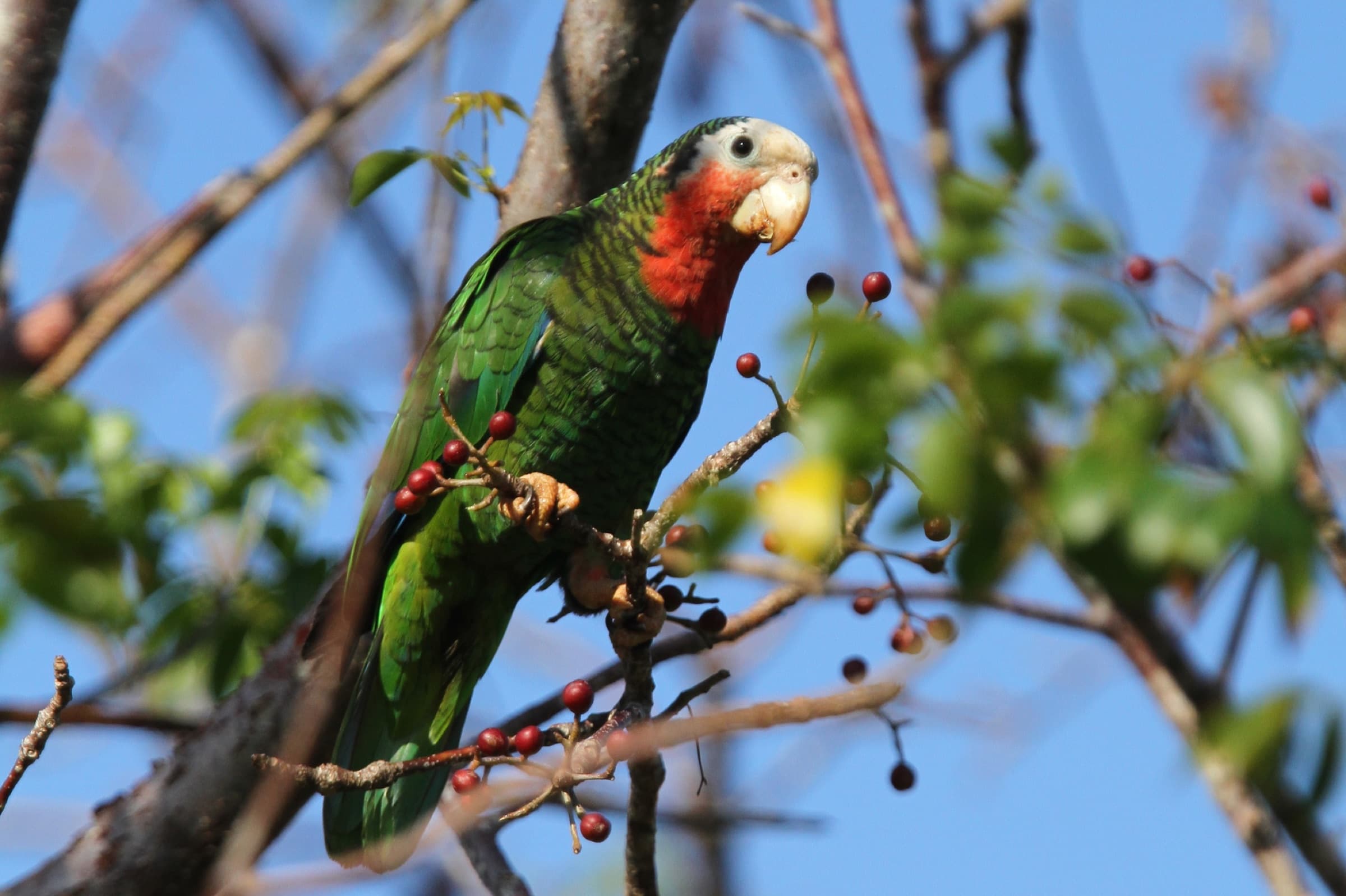
A parrot that nests underground.
Bahama parrot. Photo: Christoph Moning, CC BY 4.0, via Wikimedia Commons
- Species
- Bahama parrot
- Scientific name
- Amazona leucocephala bahamensis
- Status
- Near Threatened (species, IUCN)
- Where
- Abaco and Great Inagua
On Abaco, the Bahama parrot raises its young below the forest floor, in natural holes worn into the limestone under the pine. Researchers describe it as the only parrot in the Americas known to nest this way.
The habit makes sense in a forest that burns: a nest in the rock is out of reach of the fires that sweep through Caribbean pine. It also puts eggs and chicks at ground level, within reach of animals that people brought to the island, feral cats above all.
Abaco National Park, set up in 1994 and covering 22,500 acres, was created with this bird in mind. The Bahamas National Trust lists the endangered Bahama parrot as what the park protects.
The other surviving Bahamian population, on Great Inagua in the far south, nests in trees, as other parrots do. Two islands, two ways of nesting, one bird.
Habitat: Pine forest- Abaco National Park set up, 22,500 acres, to protect the Bahama parrot
1994
Abaco National Park set up, 22,500 acres, to protect the Bahama parrot
Bahamas National Trust
- Bahama parrots estimated on Abaco; earlier counts put it nearer 1,100
3,000 – 5,000
Bahama parrots estimated on Abaco; earlier counts put it nearer 1,100
BirdLife International
- estimated on Great Inagua, where the birds nest in trees
8,000 – 13,000
estimated on Great Inagua, where the birds nest in trees
BirdLife International
What threatens it
Predators at ground level
Nests in the rock are open to feral cats and other introduced predators in a way tree nests are not.
Loss of the pine floor
The nests depend on intact pine rockland. Clearing, development and storm damage to the forest floor take the nest sites with them.
Storms
A single hurricane can strip food trees across a whole island in a day, as Dorian did on Abaco in 2019.
What we aim to do
Support the protection of Abaco's pine rockland where the parrot nests, and back nest monitoring by the Bahamian organisations already doing it.
What nobody knows yet
How the Abaco population came through Hurricane Dorian. We found no published post-storm census.
Sources
- 1Journal of Field Ornithology, vol. 62 (1991): Bahama parrot population on Abaco
- 2BirdLife International: Cuban amazon (Amazona leucocephala) factsheet
- 3Bahamas National Trust: protected areas
Figures are reported as the sources give them. This page has not yet been reviewed by a Bahamian scientist. If you see something wrong, write to hello@veritasylva.org and we will correct it.