The national dish, taken before it can breed.
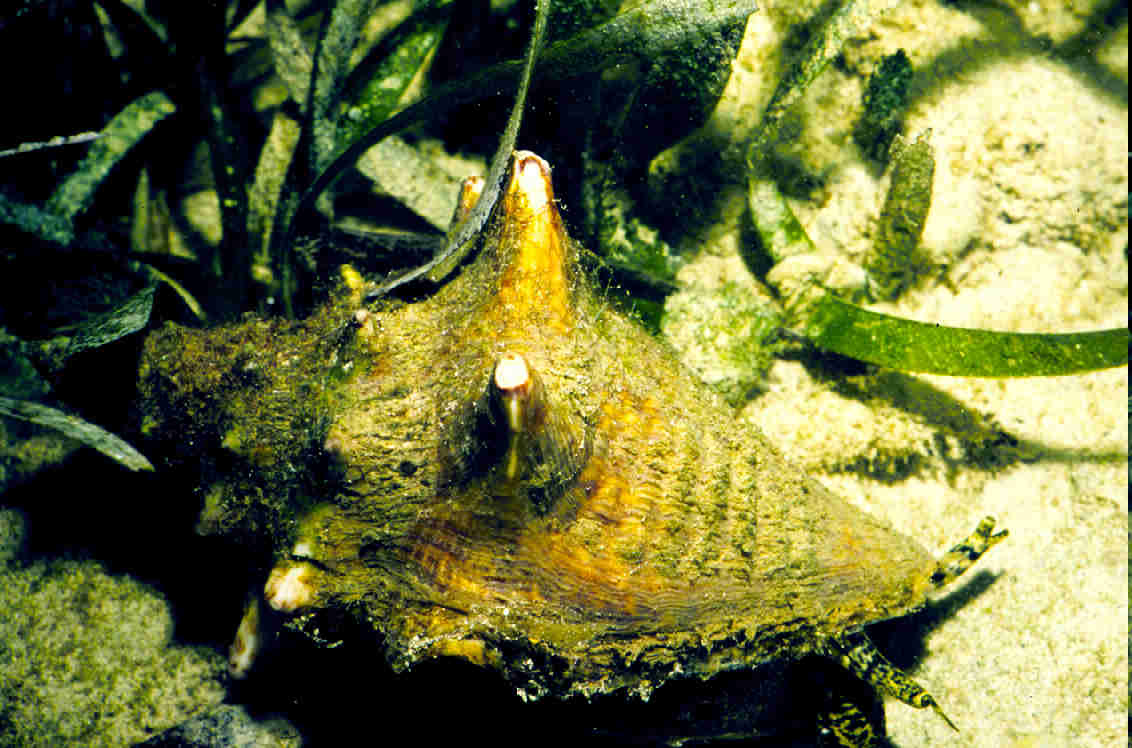
Queen conch in seagrass. Photo: NOAA, public domain, via Wikimedia Commons
- Species
- Queen conch
- Scientific name
- Aliger gigas
- Status
- Listed under CITES Appendix II
- Where
- Seagrass and sand banks throughout The Bahamas
Conch is food, income and culture in The Bahamas. A study off Eleuthera found that 86% of the conch being landed had not yet reached adulthood.
Conch graze the seagrass beds and sand banks, and they need to meet in numbers to breed. When adults are too thinly spread, mating stops even where conch are still present.
The Eleuthera survey counted 11 adult conch per hectare on the fishing grounds it studied. Its authors concluded that the population was in decline and that management needed to change urgently.
International trade in queen conch is controlled under CITES Appendix II, which means exports need permits showing they do not harm the wild population.
Habitat: Seagrass- adult conch per hectare on the Eleuthera grounds surveyed
11
adult conch per hectare on the Eleuthera grounds surveyed
Thomas et al. (2014)
- of harvested conch that were adults
14%
of harvested conch that were adults
Thomas et al. (2014)
What threatens it
Taking juveniles
Most of the conch landed in the Eleuthera study were taken before they could breed even once.
Too few to meet
Below a certain density, adults stop finding each other, and a population can collapse while conch are still being caught.
Seagrass loss
Conch depend on healthy seagrass and sand flats, which boat scarring, dredging and run-off all damage.
What we aim to do
Back surveys of conch density on the banks around Eleuthera and the Exumas, and share the results with the fishers who work them.
What nobody knows yet
How conch numbers off Eleuthera have changed since the 2014 survey.
Sources
- 1Thomas, Auscavitch, Brooks and Stoner (2014): queen conch habitat in Eleuthera, The Bahamas
- 2CITES: Appendices I, II and III
Figures are reported as the sources give them. This page has not yet been reviewed by a Bahamian scientist. If you see something wrong, write to hello@veritasylva.org and we will correct it.